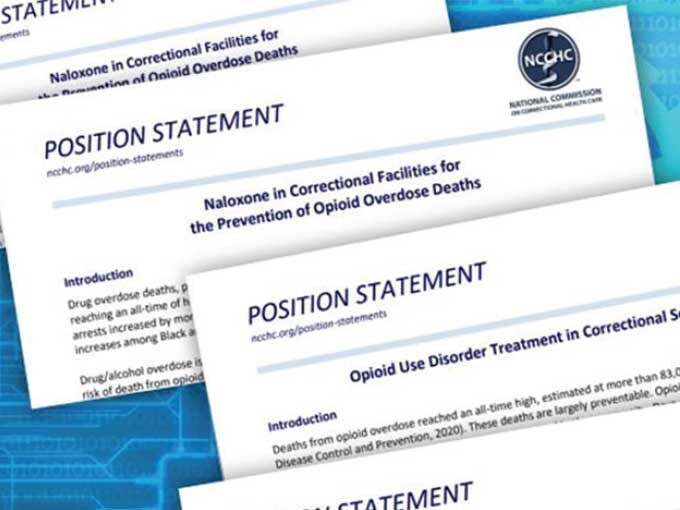
The NCCHC Governance Board has approved one new position statement, updated two position statements, and reaffirmed one position statement without edits. NCCHC position statements provide an expert opinion on issues not addressed in NCCHC Standards.
Cancer Screening and Diagnosis in Correctional Settings is a completely new position statement. It recognizes that cancer is a leading cause of death in prisons and the critical role of cancer screening in diagnosing cancer at an earlier stage, which increases the likelihood of cure and improved survival. The statement explains that cancer screening in prisons should follow the same evidence-based guidelines used in the community, with added attention to the higher risk profile of incarcerated populations. It covers barriers to screening and provides strategies for overcoming them, the importance of linkage to care, and a discussion of cancers that present outside of screening tests. View the Statement.
Opioid Use Disorder Treatment in Correctional Settings, which discusses access to and continuity of medicaitons for opioid use disorders to prevent overdose deaths and save lives. The current statement was updated in 2020 and has been reaffirmed without changes by the Board. View the Statement.
Transgender and Gender Diverse Health Care in Correctional Settings reflects significant changes in terminology, clinical guidance, and the scope of recommended care for transgender and gender diverse (TGD) people in correctional settings over the previous version published in 2020. The revision emphasizes a gender-affirming, trauma-informed approach; strengthens recommendations related to safety, dignity, staff training, and PREA compliance; and expands guidance on individualized medical and mental health care, including hormone therapy, preventive care, and treatment for co-occurring conditions. The statement also substantially expands discharge-planning recommendations, including continuity of medications, connections to gender-affirming and behavioral health care, HIV prevention, safe housing, assistance with identification documents, and peer and community support. View the Statement.
Use of Humanizing Language in Correctional Health Care, originally adopted in 2021, was reaffirmed with revisions. TNCCHC supports the use of humanizing and respectful language to describe individuals who are involved with the justice system. The position statement recommends that people who work in correctional facilities and those interacting with or conveying information about individuals experiencing incarceration (e.g., researchers, policy makers, journalists) adopt person-first language in written and oral communication. The statement includes specific recommendations and recognizes the importance of person-first language in improving access to care for incarcerated people. View the Statement.