By Deborah Ross, CCHP, NCCHC chief executive officer
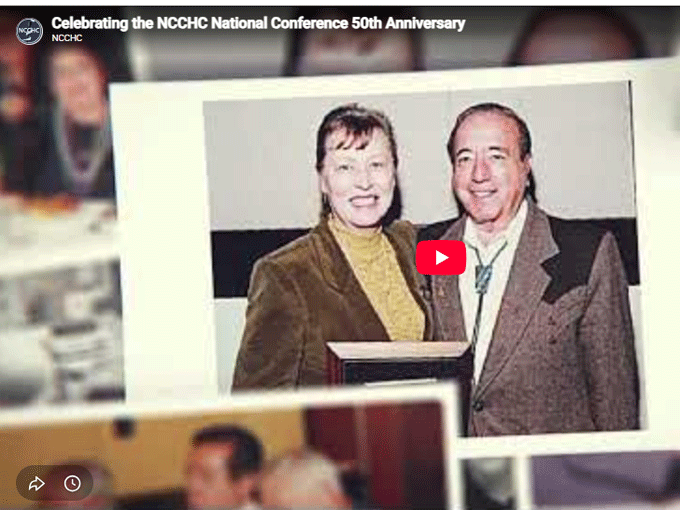
This fall, we will gather in Las Vegas for the 50th anniversary of the National Conference on Correctional Health Care. We will celebrate an extraordinary history, but even more, we will celebrate what that history makes possible.
For 50 years, correctional health professionals have come together around a powerful idea: Quality health care matters, no matter where we deliver it.
It’s a conviction built into our history. In the 1970s, studies revealed serious deficiencies in health services in jails. Health care leaders did more than document the problems. They acted. They brought people together, developed guidance for improving care, and began building the framework that would become the NCCHC Standards.
In 1976, leaders in the field developed the first Standards for Health Services in jails along with the first National Conference. From the beginning, prevention and education went hand in hand with health equity. Fifty years later, that connection remains fundamental to who we are.
Standards as Advocacy
When we talk about advocacy, we often think about speaking up. The standards give us something equally powerful: trusted guidance for what quality correctional health care looks like and how organizations can achieve it.
The standards provide a framework for the systems and practices that support quality care. They give health professionals guidance they can use in their work and organizations a road map for continuous improvement. Most importantly, they meet patient realities.
That is the impact of the Standards. They turn our commitment to quality care into guidance we can apply, evaluate, and build upon.
For 50 years, we have turned our belief in quality health care into action—and our collective voice has made the field stronger.
Our Voice Matters
Today, correctional health care occupies an important place in the larger health care landscape. The care we provide reaches beyond facility walls: to families, communities, health systems, and public health. That gives our work a tremendous, shared purpose.
We need to speak clearly about what supports quality correctional health care. We need to make the case for the resources and systems that help health professionals provide it. We need to bring evidence, experience, and the voices of correctional health professionals into broader conversations.
We also need to support the people who do this demanding work. We need to help talented health professionals see correctional health care as a place where they can build meaningful careers, develop expertise, lead, and make an impact. We need to help corrections staff respond to crises with confidence and safety.
The Next 50 Years
That is what makes this anniversary so exciting.
When we gather at the National Conference, we will honor the people who established this field and the professionals who have carried their work forward. We will also bring together the people who will shape what comes next.
Our history gives us reason for optimism because it shows what committed people can accomplish together.
Fifty years ago, leaders saw problems that demanded action. They responded by creating standards, building a professional community, and advocating for better correctional health care. Generations of professionals have strengthened that foundation through their expertise, advocacy, and commitment to patients.
As we celebrate 50 years of the National Conference, we can look ahead with clarity. We have trusted Standards to guide us and decades of knowledge and experience to draw from. And, as we’ll see in October, we have a community of professionals who care deeply about patients and believe in the value of this work.
We still have progress to make, and our history shows that we can make it together. I look forward to celebrating with you and starting our next 50 years together.