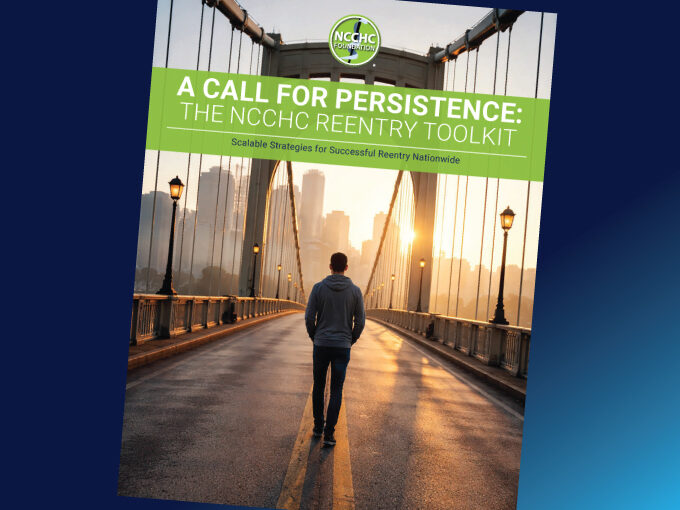
During Minority Mental Health Month, correctional leaders have a unique opportunity: to turn one of the most difficult moments in a person's life into the beginning of recovery—not just for that individual, but for families, communities, and public safety.
Why it matters
Every correctional leader knows what intake looks like. A person arrives carrying more than property and paperwork. They may also bring untreated depression, trauma, addiction, anxiety, psychosis, grief, or years of unmet behavioral health needs.
For some, intake is the first meaningful contact with a health care professional in years.
That moment matters. It is an opportunity to recognize illness, begin treatment, restore dignity, and connect someone to care before another crisis occurs.
The reality: Correctional systems did not create every circumstance that brought a person through their doors. Poverty, discrimination, violence, unstable housing, fragmented behavioral health systems, and limited access to culturally responsive care often begin long before incarceration.
But correctional health care can change what happens next.
The numbers
National data show that Black people are substantially overrepresented in prisons compared with their share of the U.S. population. People categorized as Hispanic also represent a significant share of sentenced prisoners, though "Hispanic" is a federal ethnicity category—not a race—and does not fully reflect Latino, Latina, Latine, Indigenous, Afro-Latino, and other identities. At the same time, Black adults are less likely than U.S. adults overall to receive mental health treatment.1,2
The takeaway: In many correctional systems, caring for incarcerated populations also means addressing longstanding disparities in mental health care. That makes quality behavioral health services both a clinical responsibility and an opportunity to improve health equity.
NCCHC's perspective
NCCHC's standards and position statements consistently reinforce a simple idea: quality correctional health care is ethical, evidence based, equitable, and centered on the needs of the patient.
That includes recognizing the effects of trauma, reducing barriers to care, using respectful language, measuring disparities, improving systems, and ensuring continuity of care before and after release.
Mental health care is not separate from safety.
It is part of safety.
Patients whose behavioral health needs are recognized and treated are better positioned to participate in their care, manage crises, and prepare for successful reentry. That supports safer facilities for patients, custody staff, and health care professionals alike.
The leadership challenge
Correctional leaders understand the realities of today's environment. Staffing shortages, increasing clinical complexity, aging infrastructure, budget constraints, and growing public expectations all compete for attention.
Those challenges are real. They also make strong systems even more important.
Improving mental health care does not always begin with new resources. Often, it begins with better questions.
Are patients screened consistently? Are referrals timely? Are language barriers addressed? Are outcomes reviewed to identify disparities? Are custody and health staff working from the same understanding of a patient's needs?
These questions are not about assigning blame. They are about identifying opportunities to improve care, reduce risk, and support staff.
One person's care
Quality mental health care rarely affects only one person.
When someone leaves custody with treatment underway, medications continued, a follow-up appointment scheduled, and a connection to community care, that stability can extend beyond the individual. It may improve relationships with family, increase the likelihood of keeping employment or housing, and reduce the chance that a behavioral health crisis becomes another emergency.
No intervention guarantees success. But every successful transition changes the odds.
The public safety connection
Too often, law enforcement officers become the default response when untreated mental illness reaches a crisis point.
Correctional health care cannot solve every gap in the behavioral health system. It can, however, help build a stronger bridge back to community care through thoughtful discharge planning, medication continuity, and connections to local providers.
Why that matters: Healthier transitions can reduce avoidable crises, strengthen communities, and allow law enforcement to spend more time addressing public safety rather than responding to unmet behavioral health needs.
Breaking the cycle
The effects reach beyond the person leaving custody. The CDC recognizes having a household member in jail or prison as an adverse childhood experience, and adverse childhood experiences can influence lifelong health and well-being.3
When someone returns home healthier than when they arrived, families may experience greater stability. Children may see a parent engaged in treatment instead of crisis. Communities may gain a neighbor who is better connected to care.
Correctional health care cannot erase every inequity that precedes incarceration.
But it can interrupt patterns that too often repeat across generations.
The bottom line
Minority Mental Health Month is an opportunity to recognize the influence correctional leaders already have.
Every mental health screening, every medication continued, every respectful conversation, every successful referral, and every coordinated reentry plan is an investment in something larger than the person standing in front of us.
It is an investment in healthier families, stronger communities, safer facilities, and safer neighborhoods.
Quality correctional mental health care is more than good medicine. It is an opportunity to change the next chapter—for one person, one family, and, over time, one community at a time.
Footnotes
- Bureau of Justice Statistics, Prisoners in 2022 – Statistical Tables; U.S. Census Bureau, QuickFacts: United States.
- HHS Office of Minority Health, Mental Health and Black/African Americans.
- Centers for Disease Control and Prevention, About Adverse Childhood Experiences.